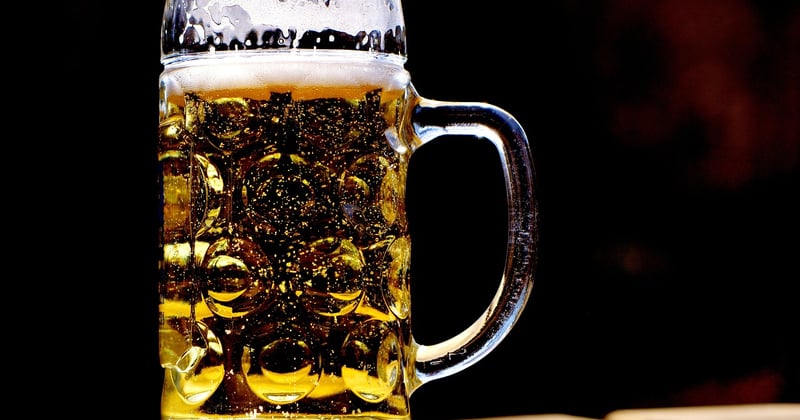
Pour a cold lager into a glass and watch it go flat in twenty minutes, then pour the same beer at 4°C into a chilled, rinsed glass. The difference isn't freshness. It's dissolved gas. Carbonation is not decoration on top of beer — it's a structural part of the drink, and once you understand the physics, a lot of brewing decisions suddenly make sense.
Key takeaways
- Beer is carbonated because CO₂ is a byproduct of fermentation, and it changes how you taste everything else in the glass.
- Carbonation levels vary enormously by style — roughly 1.5 volumes of CO₂ in a cask stout against 3.5+ in a Belgian witbier.
- Carbonation is mildly acidic (carbonic acid) and it lifts aroma, but it adds zero calories.
- Flat beer exists and is deliberate: British cask ale, young lambic, some traditional farmhouse styles.
- Bottle conditioning — refermenting in the bottle — is how brewers carbonated beer for centuries before forced CO₂ existed.
Why does beer need carbonation, and how does it actually work?
Here's the short answer: carbon dioxide does four jobs at once. It carries aroma out of the liquid, it adds a tactile prickling on the tongue, it forms carbonic acid that nudges the pH down slightly, and it protects the beer from oxygen during packaging. Take all four away and you don't get "the same beer minus bubbles." You get a different drink.
Where the gas comes from in the first place
Yeast eats sugar and produces two things you care about: ethanol and CO₂. In a sealed fermenter, that CO₂ has nowhere to go and dissolves into the beer under pressure. A healthy fermentation generates more gas than the beer can hold at atmospheric pressure, which is why fermenters have blow-off tubes and spunding valves — you're bleeding off the excess.
The numbers matter here. At roughly 12–16°C during primary fermentation, beer will naturally hold somewhere near 1.2 to 2.0 volumes of CO₂ depending on pressure and temperature. That's already carbonated. Most brewers then either capture more of it (spunding), leave it and top up later, or let it escape and carbonate from scratch.
Henry's law, or why warm beer fizzes over
CO₂ solubility depends on temperature and partial pressure. Colder liquid holds more gas. That's the entire reason a warm bottle foams when you open it: the CO₂ that was happily dissolved at 4°C can't stay dissolved at 20°C, so it comes out of solution all at once. Same physics that makes a warm Coke explode.
This is why breweries carbonate cold and package cold, and why a beer that sat in a hot delivery van tastes thin and lifeless. The gas is still in the bottle — it's just no longer in the beer.
And there's a second mechanism you should know about: nucleation. CO₂ needs a rough surface to form bubbles. Scratches in glass, dust, the etched pattern at the bottom of a proper beer glass — these are all nucleation sites. A perfectly smooth, perfectly clean glass will produce a sad, sluggish head even in a well-carbonated beer. I learned this the expensive way after buying a set of laser-etched tasting glasses and wondering why my own homebrew suddenly looked flat.
How much fizz each style actually carries
This is where most explanations stay vague, so here are real working ranges brewers aim for:
| Style | Target CO₂ (volumes) | Practical note |
|---|---|---|
| British cask ale | 1.0 – 1.5 | Served from the cask with almost no gas pressure; intentionally soft |
| Dry Irish stout | 1.5 – 2.0 | Nitrogen blends give the creamy head, not extra CO₂ |
| Standard lager / pilsner | 2.2 – 2.7 | The crisp, prickly baseline most drinkers know |
| American pale ale | 2.3 – 2.6 | Enough lift for hop aroma without scrubbing it away |
| Belgian witbier / saison | 3.0 – 3.7 | Highly carbonated; the fizz is part of the refreshment |
| German weizen | 3.3 – 4.0 | Highest of the common styles; the foam is the point |
Notice the spread: nearly a fourfold difference between a cask ale and a weizen. Anyone who tells you "beer is carbonated" as if it's one fixed thing has never filled out a carbonation chart.
Is beer carbonated like soda?
Mechanically, yes. Both rely on dissolved CO₂ held under pressure, both use the same Henry's law relationship, both go flat when warm. But the levels and the chemistry differ.
Soft drinks typically sit at 3.5 to 4.5 volumes — noticeably fizzier than almost any beer. A cola is engineered for a sharp, aggressive bite on the first sip. Beer is engineered for balance: too much gas and the carbonic acid starts masking malt character and stripping hop aroma out of the glass.
There's also a pH story. Beer sits around pH 4.0–4.5, already acidic from fermentation and from the malt and hops. Soda is acidified further with phosphoric or citric acid and then loaded with sugar to compensate. In beer, carbonic acid is one voice in a choir. In soda, it's practically the whole melody.
Do they carbonate the same way? Not always. Industrial soft drink production injects CO₂ into a chilled, deaerated syrup-water blend. Beer brewers have an extra option soda makers don't: they can carbonate by refermentation, using live yeast to generate gas inside the package. That's a genuinely different process, and it produces a finer, more persistent bubble in my experience — though I'll concede that's partly a romantic bias talking.
Is beer carbonated naturally?
Sometimes entirely, sometimes not at all, and often a mix. There are three routes, and it's worth knowing which one you're drinking.

Natural carbonation
The CO₂ comes from yeast. Either the beer finishes fermentation in a sealed vessel and keeps its own gas (spunding), or sugar is added at packaging so a small refermentation happens in the bottle or keg (bottle conditioning). Some Belgian and English breweries still do this for everything they sell. It takes longer — two to four weeks of warm conditioning — but the bubbles tend to be finer and the beer tends to keep better, because live yeast scavenges oxygen.
Forced carbonation
The brewer ferments to completion, lets the CO₂ escape, chills the beer, and injects food-grade CO₂ through a carbonation stone. It's fast — hours, not weeks — precise, and the standard for the vast majority of packaged beer worldwide. Purists grumble. Practically speaking, a well-made forced-carbonated lager is not worse than a badly bottle-conditioned one.
Mixed
Most common of all. Ferment, spund to capture what you can, then top up with injected gas to hit the exact target. Efficient. Nobody puts it on the label.
How did they carbonate beer in the old days?
Before mechanical refrigeration and pressurised CO₂ cylinders, brewers had one tool: refermentation.
The classic method — the one still used for cask ale and traditional bottle-conditioned beers — is to package the beer while a small amount of fermentable sugar remains, or to add a measured dose of sugar or fresh wort at bottling. The yeast wakes up, ferments those last few grams per litre, and the resulting CO₂ has nowhere to go but into solution. Get the dose wrong and you have bottle bombs. Get it right and you have a naturally sparkling beer.
Champagne houses formalised the same idea into méthode champenoise, and Belgian brewers applied it to gueuze and other bottle-conditioned styles. Cask ale went a different route: the cask is vented and tapped with a soft spile, allowing just enough gas to remain for a gentle condition, served at cellar temperature with no added pressure. That's why a proper cask pint has almost no head by modern standards — 1.0 to 1.5 volumes will do that.
I once tried to bottle-condition a stout at home without a carbonation calculator, estimating the priming sugar by eye. Roughly a third of the batch gushed on opening. Two bottles actually broke in the crate. Since then I've been religious about weighing priming sugar to the gram.
Is carbonation healthy or unhealthy?
For most people, carbonation itself is neutral. The bubbles are just CO₂, and CO₂ contributes no calories, no sugar, and no sodium. The carbonic acid it forms is weak and quickly buffered.
That said, there are a few honest caveats:
- Bloating and gas. Swallowing dissolved CO₂ means swallowing gas. People with sensitive digestion or IBS often notice it, and the effect is worse with highly carbonated styles.
- Reflux. Carbonated drinks can relax the lower oesophageal sphincter and aggravate heartburn in people prone to it.
- Perception, not physiology. Fizz makes a drink feel more refreshing and can make it easier to drink quickly — which is how a sessionable 4% beer disappears in ten minutes.
Here's the honest bit: when someone asks whether carbonation is healthy, the real answer is that the CO₂ is almost never the health variable. The alcohol, the volume, and the accompanying lifestyle are. A flat beer and a fizzy one contain the same ethanol at the same strength.
Is there a beer without carbonation?
Yes, and more of it than you'd think.
- Cask ale served through a hand pump — carbonation around 1.0–1.3 volumes, which reads as nearly flat to anyone raised on lager.
- Young lambic straight from the barrel, before blending and refermentation, is genuinely still.
- Some traditional German and Scandinavian farmhouse beers, served from wooden vessels, carry minimal dissolved gas.
- Deliberately flat "still beer" projects — usually experimental, sometimes aged in oak, occasionally excellent and often forgettable.
There's also the accident category: a beer served through a badly maintained draft line, or a bottle with a compromised cap, is flat without anyone intending it. That's not a style, that's a fault.
What happens when you remove the gas? The aroma drops off sharply — CO₂ is a carrier, and without it those volatile hop compounds stay in the glass instead of reaching your nose. The beer also tastes flatter in a literal sense, because carbonic acid contributes a faint tang that balances malt sweetness. And the body feels heavier, more syrupy, because the tactile lift is gone.
Is draft beer carbonated, and is bottled beer different?
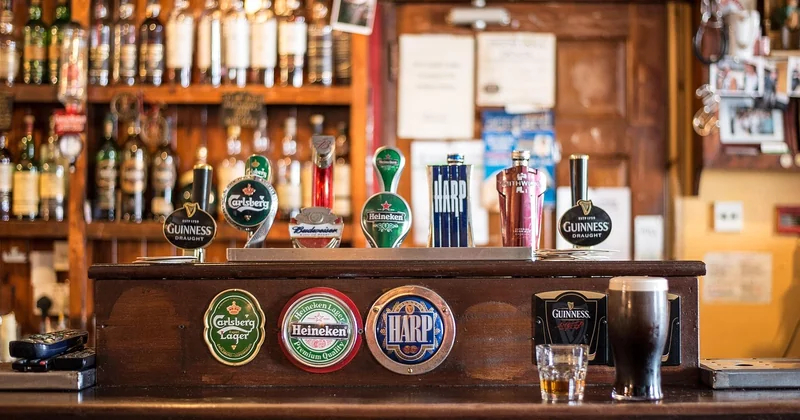
Draft beer is carbonated — often to the same target as the bottled version of the same recipe, but the delivery is different. A keg is pushed with CO₂ (or a nitrogen-CO₂ blend for stouts), and if the line pressure isn't balanced against the beer's own carbonation level and the serving temperature, you get either a foamy mess or a flat pour. This is why a pint can taste noticeably different from bar to bar even with identical kegs.
Bottled and canned beer is generally carbonated to the same spec, though packaging adds a wrinkle: the filling process must keep CO₂ in solution, so bottles are filled under counter-pressure at cold temperatures. Cans have an advantage here — they're lighter, block light entirely, and their seams handle pressure predictably. I switched a small batch of homebrew from bottles to cans out of curiosity and the carbonation retention over three months was visibly more consistent. That's an anecdote, not a study, but it matched what commercial packagers told me.
What is the most unhealthiest beer to drink?
There's no single "unhealthiest" beer, and anyone who names one brand is guessing. But you can rank the factors that actually matter, and they're rarely the ones people assume.
The variables, roughly in order of impact:
- Alcohol by volume. A 12% barrel-aged stout delivers three times the ethanol of a 4% session ale in the same glass. Ethanol is the primary health concern in any beer.
- Serving volume. A pint of 5% beer is more alcohol than a 330ml bottle of 7%. Glass size quietly doubles intake.
- Added sugar and adjuncts. Fruit purees, lactose, and syrups raise calories without raising alcohol. A pastry stout can push 350+ calories per 330ml.
- Carbonation level — barely relevant. Almost nobody's health problem is caused by dissolved CO₂.
So the honest answer: the "unhealthiest" beer is a high-ABV, high-sugar, large-format one consumed often. It's a pattern, not a label. A strong imperial stout once a month is a different thing from four pints of it a week. I'd rather drink a well-made 4.2% bitter regularly than pretend an 11% pastry stout is a wellness product.
The thing worth remembering
Carbonation is the least discussed and most structurally important thing in your glass. It carries the aroma you paid for, it changes the texture of every sip, it protects the beer from oxygen, and it ranges across a fourfold spread depending on what the brewer was trying to achieve.
Next time a beer tastes dull and you blame the recipe, check the temperature and the glass first. Nine times out of ten the gas is still there — it has just decided not to stay dissolved.