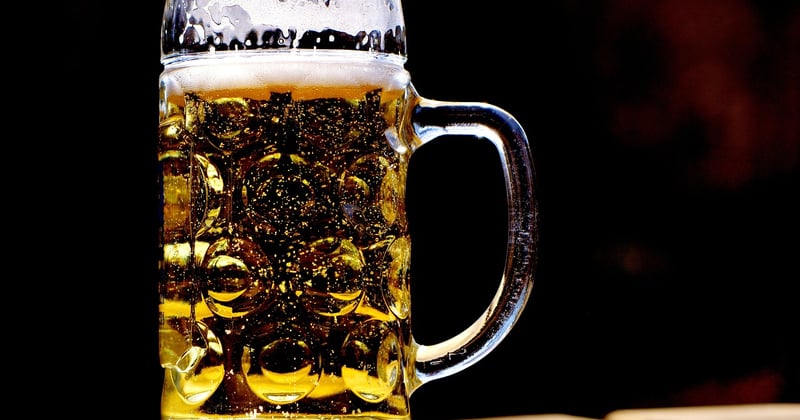
Two beers sit in front of you. One is a hazy IPA with mango on the nose. The other is a pale, crystal-clear pilsner. Same grain bill, roughly. Same water. Same hops, maybe even the same hop variety. The thing that split them into two completely different drinks is invisible, single-celled, and about five microns wide.
I brewed my first batch on a stovetop in a cramped kitchen, and I'll admit I had no idea what I was doing. I pitched a packet of dry yeast that came free with the kit and let it sit at whatever my radiator decided was room temperature. The result tasted like fruity bread. Not bad, exactly. Just... not what the recipe promised. That was my first lesson in the difference between ale yeast and lager yeast, and it took me another two years and a broken fermentation fridge to actually understand it.
Key Takeaways
- All beer is either an ale or a lager, and the deciding factor is the yeast species, not the color or the hops.
- Ales use Saccharomyces cerevisiae and ferment warm, roughly 15–24 °C.
- Lagers use a hybrid yeast related to Saccharomyces pastorianus and ferment cold, then rest for weeks near freezing.
- "Top" and "bottom" fermentation describes where yeast settles at the end, not where it works during fermentation.
- Temperature is the lever that changes flavor: warm fermentation produces fruity esters, cold fermentation produces a clean, crisp profile.
The real difference between ale and lager yeast
Here's the short answer: ale yeast and lager yeast are different organisms with different temperature preferences, and those preferences produce different flavors. That's the whole game.
Ale yeast is Saccharomyces cerevisiae—the same species you'd find in a bakery, incidentally, though brewing strains are selected for how they handle sugar and alcohol. It likes warmth. Give it a fermenter at 18–22 °C and it works enthusiastically, throwing off aromatic compounds called esters that smell like pear, banana, or ripe apple.
Lager yeast is a different creature. It's a hybrid, related to Saccharomyces pastorianus, and it prefers the cold. At 8–12 °C it ferments slowly, producing far fewer of those fruity esters. The beer coming off it tastes clean, dry, and sharp.
Fermentation temperature at a glance
Numbers make this concrete. Below is roughly what you're working with at each stage:
| Factor | Ale yeast | Lager yeast |
|---|---|---|
| Species | S. cerevisiae | S. pastorianus (hybrid) |
| Fermentation temp | 15–24 °C | 7–13 °C |
| Fermentation speed | 3–7 days | 1–3 weeks |
| Conditioning | Short, days to a week | Lagering at 0–4 °C for 3–8 weeks |
| Typical flavor | Fruity, ester-forward | Clean, crisp, neutral |
When I finally bought a cheap temperature controller and a secondhand chest freezer, my lagers stopped tasting like "ale that had been left in a cold room." The difference was a steady 11 °C instead of a swinging 17 °C. Stability matters as much as the number.
What "top" and "bottom" fermentation actually means
You'll see ales described as "top-fermenting" and lagers as "bottom-fermenting," and this trips people up constantly. It does not mean the yeast swims at the surface the whole time.
Both yeasts work throughout the liquid. The distinction only shows up at the end. Ale yeast tends to flocculate—clump together and rise—toward the top, forming a thick foam cap you can skim off. Lager yeast settles to the bottom of the tank. That's it. The labels come from where brewers harvested the yeast, not from some fundamental behavioral difference during the process.
Is an ale a lager?
No. An ale and a lager are the two mutually exclusive branches of the beer family tree, and yeast is what separates them. An ale is brewed with ale yeast above roughly 15 °C. A lager is brewed with lager yeast below that, then stored cold for weeks.
The confusion is understandable, because the words don't map neatly onto what you taste. A dark, roasty stout is an ale. A pale, mild pilsner is a lager. Color tells you nothing. Bitterness tells you nothing. Alcohol strength tells you nothing.
Guinness? An ale. Despite the dark pour and the Irish reputation for cold, crisp pints, it's fermented with ale yeast. Budweiser? A lager. Clean, cold-fermented, and built for consistency at enormous scale. Two beers that feel like opposites in the glass, split along the same dividing line as everything else.
What kind of yeast makes beer?
Beer is fermented by Saccharomyces yeasts, and almost every commercial beer you'll drink falls into one of the two groups above. There's a third category worth knowing about: wild and mixed fermentation, using Brettanomyces or lactic acid bacteria, which produces sour and funky beers like lambics and goses. These sit outside the ale/lager split entirely.
The job yeast does is straightforward chemistry. It eats sugar, produces alcohol and carbon dioxide, and—crucially—leaves behind a fingerprint of aromatic compounds. Change the strain, change the temperature, and you change the fingerprint. That's why two breweries can use identical recipes and produce beers that taste nothing alike.
Is lager the same as wheat beer?
No, and the two words answer different questions. "Lager" describes the yeast and process. "Wheat beer" describes the grain bill—a beer brewed with a large proportion of wheat alongside barley.
Most wheat beers are ales. German hefeweizens, Belgian wits, and American wheat ales all use ale yeast and ferment warm, which is exactly where their banana-and-clove character comes from. There are lager-brewed wheat beers too, but they're a minority. If you order a cloudy wheat beer and expect lager crispness, you'll be surprised.
Does lager have yeast in it?
Yes. Every beer that fermented has yeast in it, lager included. The question is how much survives to the glass.
Lagers are typically filtered or left to settle for long enough that very little yeast remains suspended. They pour bright and clear, and the yeast is largely gone. Ales, especially unfiltered ones, often carry visible haze from yeast still in suspension. Bottle-conditioned beers—where a small dose of sugar and yeast is added before capping—contain live yeast in every bottle regardless of style.
Practically speaking, this matters if you're avoiding yeast for dietary reasons or if you're pouring a homebrew and want to leave the sediment behind. Tilt the bottle, stop before the last centimeter. That's the yeast layer.
Ale vs lager taste, and what actually lands in your glass
The flavor difference follows directly from fermentation temperature, and you can taste it without knowing a thing about microbiology. Warm fermentation gives you fruit: esters, a bit of spice, sometimes a touch of solvent heat. Cold fermentation gives you clarity: the malt and hops speak without the yeast shouting over them.
That's why a badly made ale can taste muddy and a badly made lager can taste like nothing at all. There's no ester blanket to hide behind.
Where does pilsner fit?
A pilsner is a lager, not a third category. It's a specific lager style—pale, hoppy, brewed originally in the Czech town of Plzeň—but it still uses lager yeast and cold fermentation. Same for bock, helles, and dunkel. All lagers. The word "pilsner" tells you about the recipe, not the fermentation.
What I'd tell you before your first batch
If you're brewing at home, start with an ale yeast. It's forgiving, it ferments fast, and a slight temperature swing won't ruin it. Save lager yeast for when you have real control over your fermentation chamber—a fridge with an inkbird-style controller and a thermometer you trust.
And if you want to understand the difference without brewing a thing, buy a hefeweizen and a German pilsner from the same shop, pour both into clean glasses, and smell them side by side. The wheat beer will hit you with fruit. The pilsner will smell like grain and herbs and very little else. That gap, right there, is the gap between two yeast species doing their work at two different temperatures.
Everything else about beer—the color, the hops, the marketing on the label—is decoration around that.