Walk into a good bottle shop in 2026 and the shelf looks nothing like it did five years ago. The hazy IPA section has shrunk. There's a wall of low-alcohol lagers. Something called "Italian grape ale" is sitting where the pastry stouts used to be. And a can of non-alcoholic pale ale costs more than the double IPA next to it.
I get asked the same question at tastings: which of these emerging craft beer styles are actually worth my money? Not worth a tweet. Worth a bottle. So here's my answer — the styles I think deserve your attention this year, plus the ones I'd skip, and the rough criteria I use to tell the difference.
Key Takeaways
- Hazy IPA is no longer the growth engine. Low-alcohol and non-alcoholic beer are where the volume is moving.
- Italian grape ale, cold IPA, and mixed-fermentation saisons are the styles with the steepest learning curve — and the highest payoff.
- The 3:30-300 rule is a useful filter: under 3.5% ABV, under 30 IBU, under 300 calories per serving. It's not a law, it's a design brief.
- Judge an emerging style by availability, price stability, and whether it pairs with food you actually eat.
- Expect more hybrid formats in 2026: beer-wine crossovers, hop-forward lagers, and barrel programs that aren't just bourbon.
Why the shelf looks different — and what that tells you
The craft beer market corrected hard after the 2019-2021 boom. Taprooms that opened on hype closed on rent. Distributors consolidated. The breweries that survived did one of two things: they got very good at lager, or they got very weird. Both routes produced styles worth exploring now.
Here's the thing about trend lists: they're written by people looking at sales spreadsheets, and spreadsheets lag reality by about eighteen months. By the time a style appears on a "top 10" list, the good versions are already sold out and the mediocre versions are filling the discount bin. So I don't read trend lists anymore. I read taplines.
What are the current trends in craft beer?
The dominant trends right now are lower alcohol without lower flavour, lager as a craft category in its own right, and fermentation-driven complexity — mixed cultures, spontaneous fermentation, and grape must. Alongside that, non-alcoholic beer has stopped being an apology and become a genuine style category with its own technical standards.
What's fading: pastry stouts loaded with adjuncts, double IPAs priced like wine, and the assumption that more hops equals better. What's rising: precision. A 4% pilsner that tastes like a 4% pilsner and not like disappointment is harder to brew than a 10% imperial anything. Brewers know this. Drinkers are catching up.
The styles worth your time this year
I'll be direct about my bias: I would rather drink a well-made 4.2% lager than an average 8% anything. That colours this list. But I've tried to include styles across the alcohol spectrum, because a good bottle shop should serve a Tuesday night and a Saturday night.
Italian grape ale — the crossover that finally works
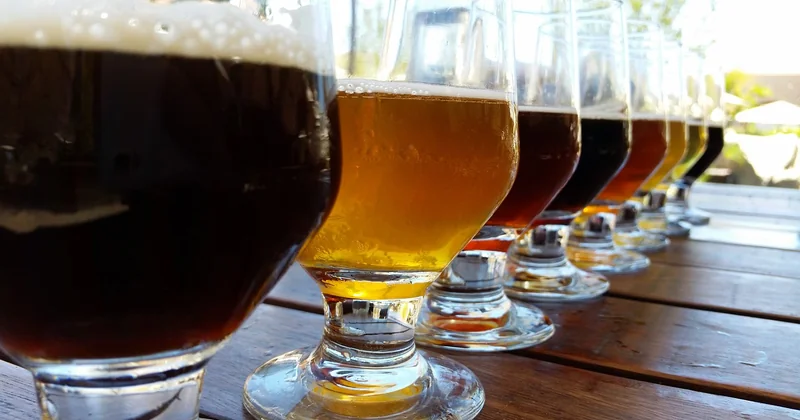
Beer-wine hybrids have been attempted for years and mostly failed, because brewers treated grape must as a novelty ingredient rather than a structural one. The Italian version — sometimes labelled uve or birra con mosto — treats it as the point. You get the tannin and acidity of a white wine with the body and carbonation of a saison.
The catch: quality is wildly inconsistent. I bought four bottles from four breweries last autumn and two were undrinkable — thin, sour in the wrong way, like a wine that had gone off. The two good ones were extraordinary. Look for bottle-conditioned versions from breweries that also make saison, and check the vintage. This is a style where the year matters.
Cold IPA — the style that shouldn't work but does
Cold IPA is a lager fermented with ale yeast at lager temperatures, then dry-hopped hard. It sounds like a gimmick. It isn't. You get the crispness and drinkability of a pilsner with the aromatic punch of a West Coast IPA, and crucially it finishes dry instead of cloying.
My honest assessment: this is the most underrated style on the market right now, and it's also the one most likely to be ruined by breweries chasing the haze crowd. If it's cloudy, someone misunderstood the assignment. Cold IPA should be bright and clear, and it should taste like it was made by someone who respects lager.
Mixed-fermentation saisons
Saison was almost killed by being made boring — every brewery had one, most were clean and forgettable. The revival is happening in the mixed-fermentation corner, where Brettanomyces and lactic acid bacteria are doing slow work in barrels and the result is funky, dry, and genuinely complex.
This is not a beginner style. I'll admit I didn't get it at first; my notes from an early tasting say "tastes like a barn, in a bad way." Three years later it's the section of my cellar I'm most protective of. Start with a Brett-only saison before you go full spontaneous — the acidity curve is gentler.
Hop-forward lagers and West Coast pilsner
The line between pilsner and IPA is dissolving, and the results are mostly good. A modern West Coast pilsner is dry, bitter, and heavily dry-hopped with the same varieties you'd find in an IPA — Citra, Mosaic, Nelson Sauvin. What you lose in malt sweetness you gain in drinkability.
Price check: these should cost roughly the same as a decent lager, not the same as a double IPA. If a shop is charging IPA money for a 4.8% pilsner, that's a shop marking up a trend, not a brewer making something rare.
Non-alcoholic pale ale — the real test case
I was sceptical for a long time. Most early non-alcoholic beer tasted like wort that had given up. The current generation is different: brewers are using cold-contact hopping and specialised yeasts to build real aroma, and the best examples now hold their own against a 5% pale ale in a blind tasting.
Real talk — the price is the problem. A four-pack of good NA pale ale can cost more than the alcoholic equivalent, because the dealcoholisation process is expensive and the volumes are still small. That will change. For now, treat it as a premium category and buy accordingly.
What is the 3:30-300 rule for beer?
The 3:30-300 rule is a shorthand filter some brewers and buyers use to describe a modern drinkability target: under 3.5% alcohol, under 30 IBU bitterness, under 300 calories per serving. It's not an official standard and nobody enforces it — it's a design brief for sessionable beer that still tastes like something.
Why it matters for emerging styles: it gives you a way to evaluate a low-alcohol beer that isn't just "does it taste weak?" A 3.4% lager at 25 IBU and 110 calories is a completely different product from a 3.4% lager that tastes like fizzy water, even though both pass the first test. The rule forces you to look at the whole balance.
My caveat: don't apply it to every style. A mixed-fermentation saison at 6% is not failing the rule; it's a different job. Use 3:30-300 as a lens for session beer, not as a scorecard.
How to judge whether a style is worth exploring
Four criteria, in order of how much they've saved me money:
- Availability. Can you buy a second bottle? A style you can only taste once isn't a style you can learn.
- Price stability. If the same beer costs 20% more every six months, you're funding a trend, not buying a product.
- Learning curve. Does the second bottle teach you something the first didn't? Good emerging styles reward attention.
- Food. Does it work with a meal you actually cook? A beer that only works with a cheese board you'll never assemble is a museum piece.
- And a fifth, which I'll add because it matters: does the brewer seem embarrassed by it? If the taproom staff hedge when you order it, walk away.
What are the trends in craft beer for 2026?
For 2026, expect three things to accelerate. First, barrel programs are diversifying beyond bourbon — rum, mezcal, and wine casks are showing up in styles that used to be bourbon-only. Second, low-alcohol is becoming a technical category, with breweries competing on flavour at 2.5% rather than apologising for it. Third, regional identity is back: breweries are leaning into local water profiles and local grain rather than chasing a global style sheet.
The newest trend in beer, honestly, isn't a style at all. It's a shift in how breweries sell — smaller batches, tighter distribution, taproom-first. That's less exciting than a new IPA variant and far more consequential for what you'll actually find on the shelf.
A quick comparison of the styles in this piece
| Style | Typical strength | Learning curve | Best for |
|---|---|---|---|
| Italian grape ale | 5.5–7% | Medium | Wine drinkers, food pairing |
| Cold IPA | 6–7% | Low | IPA drinkers who want crispness |
| Mixed-fermentation saison | 4.5–7% | High | Cellaring, slow evenings |
| West Coast pilsner | 4.5–5.5% | Low | Everyday drinking |
| Non-alcoholic pale ale | <0.5% | Medium | Weeknights, designated drivers |
What I got wrong, and what it cost me
Two years ago I bought a case of a hyped Italian grape ale without tasting it first. Sixteen bottles. Eleven of them went down the drain, and I'm still slightly annoyed about it. The lesson wasn't "avoid grape ale" — it was "never buy a case of a style you haven't tasted from that brewery."
The other mistake was ignoring non-alcoholic beer for so long. I assumed the category was for people who didn't like beer. Then I tried a cold-hopped NA pale ale at a festival and had to check the label twice. I'd been dismissing an entire segment of the market out of snobbery, which is a bad look for someone who writes about beer.
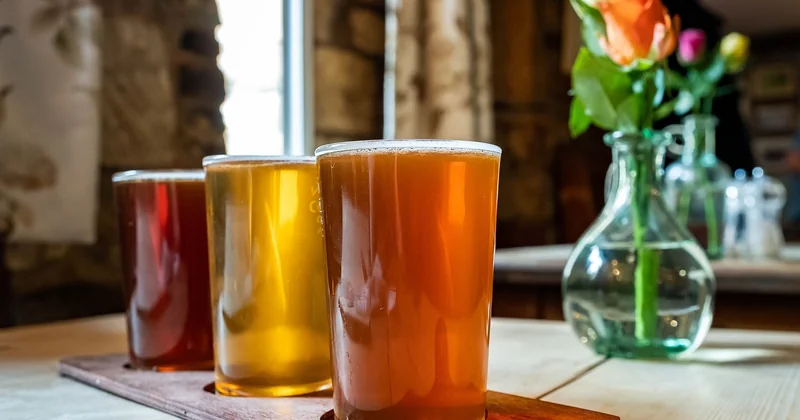
Which is the whole point, really. Emerging styles are worth exploring precisely because your taste is probably wrong about one of them. Mine was. Go buy four single bottles instead of a case, taste them side by side, and see which one you'd actually reach for on a Tuesday.