Order a stout and a porter side by side in any decent taproom and you'll get two glasses of near-black beer that look, smell and often taste like siblings. So what actually separates them? I've asked that question behind the bar, argued about it with brewers, and once sat through a blind tasting where four experienced drinkers — me included — confidently mislabeled three of six beers. If that sounds like a confession, it is. The stout vs porter line is real, but it's thinner and more tangled than most menu descriptions admit.
Key takeaways
- Historically, "stout" started life as an adjective meaning strong, not a style of its own.
- The clearest practical marker is roasted barley in a stout vs. black or chocolate malt in a porter.
- Alcohol, color and bitterness ranges overlap heavily between the two families.
- Guinness is a dry Irish stout — the roast is sharp and the body light, nothing like a classic porter.
- Most modern labels are driven by brewery convention as much as by any fixed definition.
What makes a stout different from a porter: the difference that actually holds up
Here's the thing: if you strip away marketing, the most defensible distinction is the grain bill. A stout traditionally gets roasted barley — an unmalted grain roasted hard enough to go dark and slightly acrid. A porter leans on black malt or chocolate malt, which are malted and roasted but tend to land softer, with more cocoa and less of that dry, almost burnt edge.
That single decision changes everything downstream. Roasted barley brings a coffee-and-char bite that finishes dry. Chocolate malt brings roundness. I brewed a five-gallon batch of each on the same day a few years back, same yeast, same hops, and the difference was unmistakable at the two-week mark: the roasted-barley version tasted like cold espresso, the chocolate-malt version tasted like a brownie crust.
Why the line blurs so badly in practice
Because nothing enforces it. There is no brewing police. Style guides exist, competitions judge against them, but a brewery can call a beer whatever it sells best. I've tasted "porters" with roasted barley and "stouts" built on chocolate malt, and the brewers knew exactly what they were doing — they picked the name that moved units.
So the honest answer to the question is layered: technically there's a grain distinction, practically it's a convention, and sensorially you'll often just be guessing. The catch? That doesn't make the categories useless. It makes them a starting point rather than a rulebook.
What defines a porter beer?
A porter is a dark, top-fermented ale built for malt depth rather than roast aggression. Think toffee, dark bread, cocoa, a touch of dried fruit, and a bitterness that supports rather than dominates. Color sits in the deep brown-to-black range, and the body is usually full without being syrupy.

The name comes from London's street and river porters, who apparently drank a lot of it — a working beer for working people, historically brewed in volume. That heritage matters: porters were designed to be drinkable in quantity, which is why the classic examples aren't punishing.
- Base: pale malt with a supporting cast of crystal and roasted malts
- Roast character: present but rounded, cocoa-forward
- Body: medium to full, often with a soft, malty finish
- Bitterness: moderate; the malt is the star
- Sub-styles to know: Baltic porter (brewed strong and lagered, often 8%+ and dangerously smooth) and robust porter (darker, roastier, more assertive)
When I want to introduce someone to dark beer, a well-made porter is the glass I reach for. It forgives. A mediocre stout does not.
Is Guinness like a porter?
Not really, and the comparison trips people up constantly. Guinness is a dry Irish stout: light-bodied for its color, sharply roasty, with a distinctive sour-ish tang from the roasted barley and a low, clean bitterness. It's served on nitrogen, which gives that creamy cascade and soft mouthfeel.
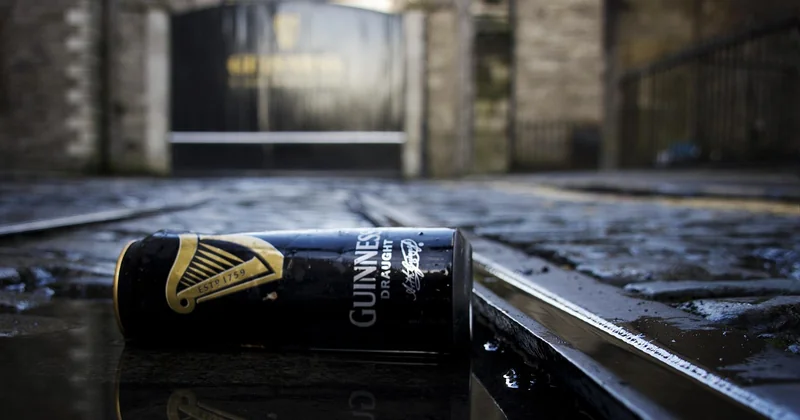
A classic London porter is rounder, sweeter, more malt-forward, and usually served on standard CO2. Put them side by side and the porter tastes fuller and gentler, the Guinness leaner and more acidic. Same color family, very different animals.
Where the confusion comes from: both descend from the same London brewing tradition, and for a stretch of history "stout porter" just meant a stronger porter. The word "stout" was an adjective — a stout anything was a strong anything. Over time it detached and became its own label.
What are the key differences between a standard stout and an imperial stout?
Strength, first and foremost. A standard stout generally lands somewhere around 4% to 6% alcohol. An imperial stout — originally brewed in England for export to the Russian court, hence "Russian imperial stout" — typically starts around 8% and climbs past 12% without much effort.
But alcohol is only the headline. The real shift is in body and intensity: an imperial stout is thicker, sweeter, often aged in barrels, and loaded with dark fruit, molasses and booze warmth. Bitterness scales up too, because that much residual sugar needs balancing. A standard stout is a session-adjacent pint; an imperial is a sipping beer you treat like port.
| Attribute | Standard stout | Imperial stout |
|---|---|---|
| Alcohol | Roughly 4–6% | Usually 8–14% |
| Body | Medium to full, drinkable | Thick, chewy, sometimes syrupy |
| Flavor focus | Roast, coffee, dry finish | Dark fruit, molasses, barrel notes |
| Serving | Pint | Small snifter, often shared |
| Ageability | Best fresh | Improves for months or years |
Where do milk stout, oatmeal stout and imperial porter fit?
This is where labels really start to slide. A milk stout adds lactose for sweetness and body. An oatmeal stout adds oats for a silkier texture. An imperial porter — yes, that exists — borrows the strength of an imperial stout but keeps the softer, cocoa-leaning malt profile. Two brewers can make near-identical beers and file them under different names, and both are technically inside the lines.
My advice after too many confusing menus: ignore the category for a second and ask what you actually want. Sharp and roasty? Go stout. Rounded and malty? Go porter. High-octane and dessert-like? Imperial anything.
How to tell them apart in the glass
Blind tasting is humbling. I'll admit I once called a Baltic porter a stout with total confidence, then got corrected by the label. A few cues do help:
- Smell first. Cold coffee and char point toward roasted barley; cocoa and dark bread point toward porter.
- Check the finish. Stouts dry out; porters tend to stay sweet a beat longer.
- Look at the body. Dry Irish stouts read thinner than their color suggests.
- Read the ABV. Above roughly 8%, you're in imperial territory regardless of what the label says.
None of these are certainties. Together, they get you right more often than chance — which, honestly, is the most any of us can claim.
The next time a menu tries to make the choice feel obvious, remember that the boundary you're crossing is partly historical accident and partly brewer's whim. Which means the only reliable test isn't the label at all. It's the second sip, when the novelty of the color wears off and you know whether you want another.